Redesigning zSpace Studio for K–12 Classrooms
Redesigned an AR/VR creation tool for K–12 classrooms and built the design system that now powers four products.
Project overview
What I worked on
UX Design
Visual Design
Design Systems
apps powered by the A3 design system
4
average ship time for subsequent apps, down from 9
~6–7 mo
components in a shared system built from scratch
211
Impact Summary
Overview
Studio is zSpace's AR/VR creation tool, used in thousands of K–12 classrooms. When I joined the project, there was a lot of opportunity to simplify. The creation flow had a lot of steps, content discovery lived in a separate app, and the experience was tied to specialized hardware. I redesigned the core experience and built the visual language that became a shared design system across zSpace apps.
The Problem
Studio had evolved over time without a cohesive design pass. The interface relied on floating windows and disconnected toolbars. Teachers were managing too much at once, and new users had a hard time knowing where to start.

The Legacy Interface. Users were forced to manage multiple floating windows and disconnected toolbars, resulting in high cognitive load and an obscured workspace.
The Solution
We rebuilt the experience around the core idea to make it the experience familiar to teachers. The result is an intuitive workflow that aligns with what educators already know and do.
Three decisions shaped the redesign:
01. A familiar structure
The original editor asked a lot of teachers. Too many panels, too many modes. We simplified it into a Slide Builder for 3D scenes and a Notebook Builder for questions and prompts. Adopted a workflow that felt closer to PowerPoint than a 3D editing suite.
02. Content discovery inside the app
Finding and launching lessons used to mean leaving Studio entirely, breaking the flow of a class. I designed an Activity Gallery that lets teachers browse, and launch lessons without leaving the app. Combined with a built-in Model Gallery for open exploration, the experience started to feel like a sandbox where discovery and creation happen in the same place.
03. Broader input support
The original experience was built around zSpace's stylus hardware. That worked well in classrooms that had it, and limited classrooms that didn't. I designed 2D interaction gizmos for mouse and trackpad users so students could manipulate 3D objects on a standard laptop. The stylus experience stayed intact for schools that used it.
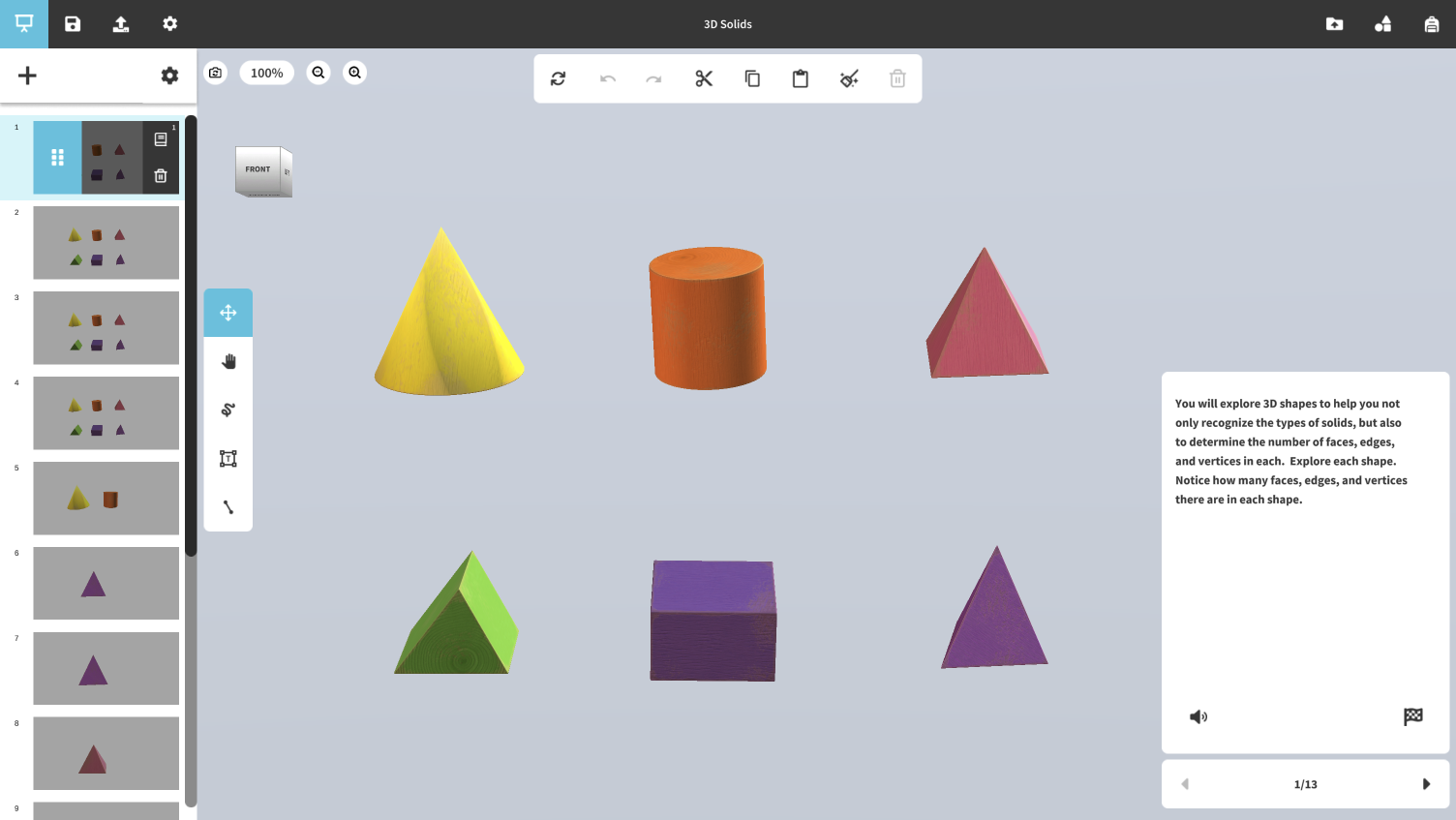

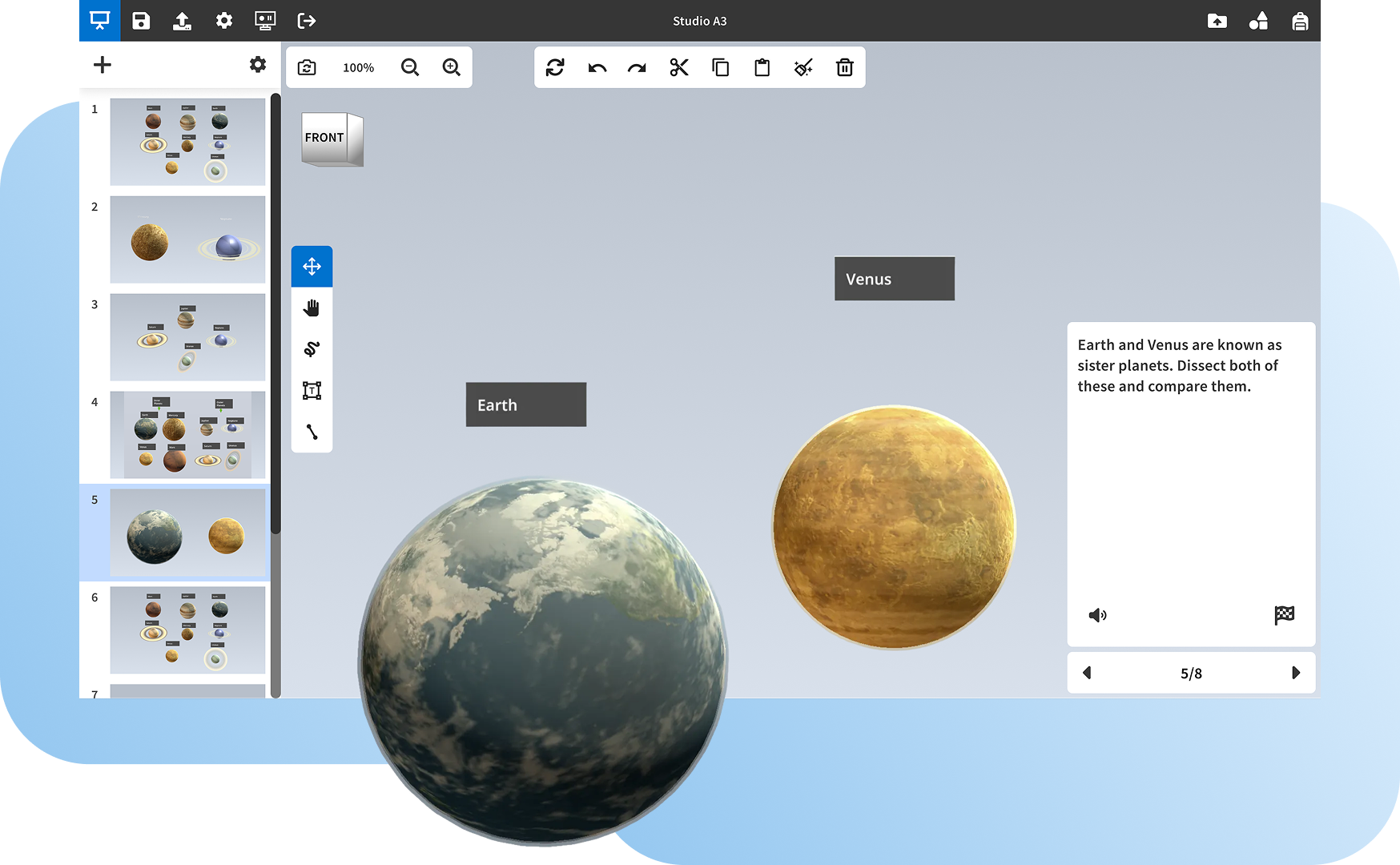
The new "Slide Builder" adopts a linear presentation metaphor. By placing scene management on the left rail and contextual tools on the right, we aligned the interface with tools teachers already use daily.
The unified Activity Gallery. Previously, content was hidden in zCentral; this visual grid allows for instant discovery, previewing, and launching of curriculum-aligned lessons without leaving the app.

Figure 4: Mouse interaction has been enabled by adding dedicated gizmos for users of both mouse and trackpads, improving input support and usability.
Studio in use during an eighth-grade science lesson on energy and states of matter at Chinle Junior High. The familiar structure and simpler interactions let the teacher lead the lesson while students stayed engaged with the content.
See it in the Classroom
System Impact
This started as a redesign for one app, turned into the foundation for a design system. The visual language and interaction patterns I built for Studio became the A3 Design System. 211 components, built from scratch now shared across Franklin's Lab, Newton's Park, and Math Island. The first app took about nine months to ship. Each one after that took about six.
Takeaway
Studio A3 reshaped how I think about designing for non‑technical users. Adoption starts with trust, and trust usually starts with familiarity. Every decision we made came back to what teachers already understood. The design system grew from that same thinking. When the foundation is consistent, every new product feels connected and every new build gets easier.
Studio is currently going through another ground-up redesign based on years of real classroom use. Launching 2026.